

Are LED Face Masks Worth It? Benefits, Limitations, and Who They’re For
LED face masks have moved from professional skincare clinics into everyday home routines. They promise a convenient way to use red, blue, or near-infrared light without booking repeated appointments—but many popular masks cost several hundred dollars.
So, are LED face masks actually worth it?
The short answer is: they can be, but only for the right person, the right concern, and the right expectations. Research suggests that certain wavelengths may support improvements in fine lines, skin texture, and mild-to-moderate acne. However, results vary considerably between devices, and an LED mask is not a replacement for medical treatment or a consistent skincare routine.
This guide explains what LED face masks may do, where their limitations lie, and what to consider before buying one.
What Does an LED Face Mask Actually Do?
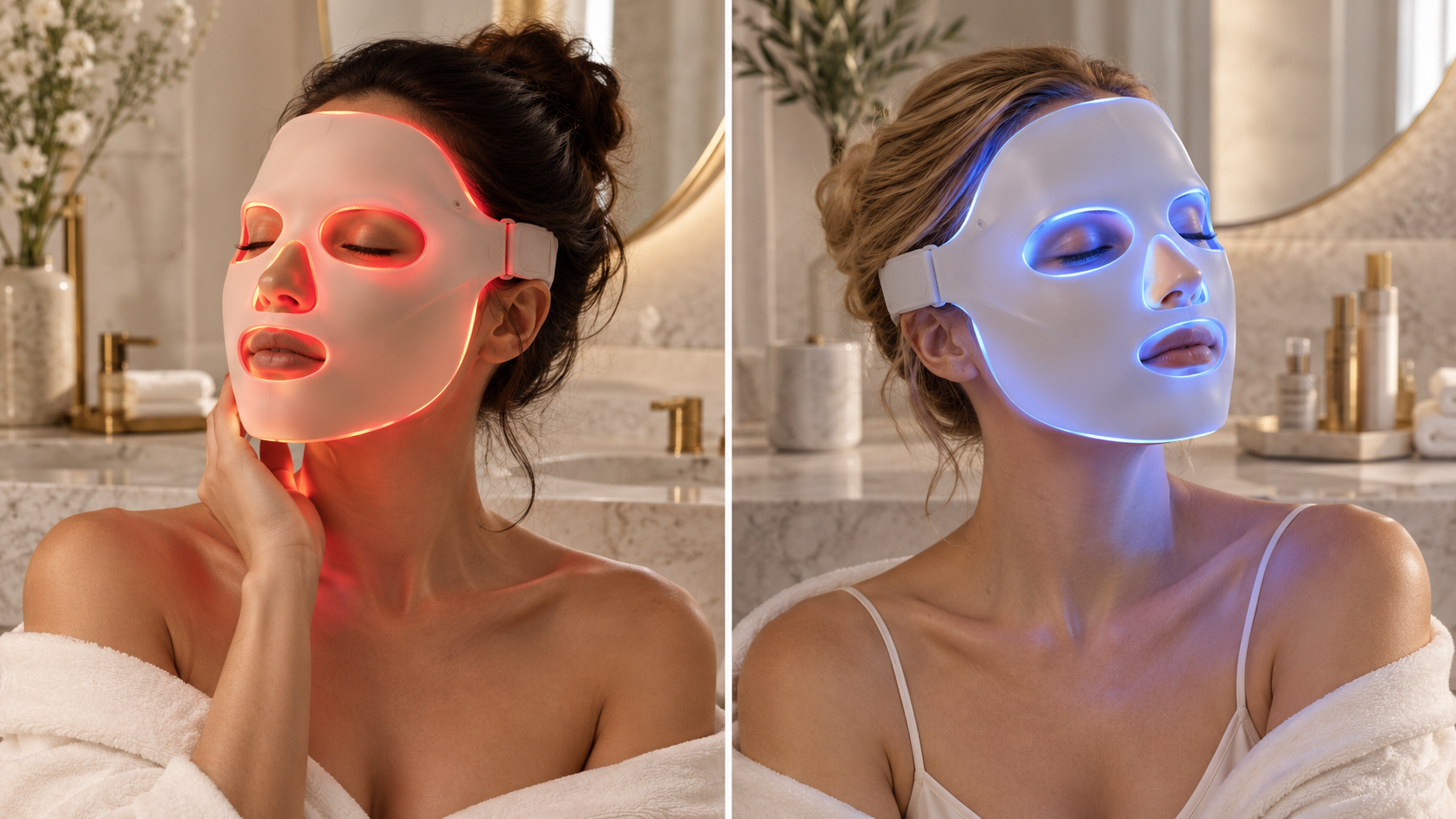
LED stands for light-emitting diode. An LED face mask uses multiple small lights to expose the skin to specific wavelengths.
Different wavelengths are marketed for different purposes:
- Red light is commonly used in devices intended to address fine lines and general skin rejuvenation.
- Near-infrared light is invisible to the human eye and is frequently paired with red light in anti-aging devices.
- Blue light is commonly found in devices designed for mild-to-moderate inflammatory acne.
- Combination modes may use more than one wavelength during the same treatment.
Unlike ultraviolet light, the wavelengths used by reputable LED skincare devices are not intended to tan the skin. They also do not work by aggressively exfoliating or resurfacing it.
The experience is generally gradual. A mask delivers repeated, controlled light exposure over a series of sessions rather than producing an instant transformation.
Potential Benefits of LED Face Masks
Fine Lines and Skin Texture
Several controlled studies have reported improvements in measurements such as fine lines, wrinkles, roughness, or overall skin appearance following repeated red and near-infrared light treatments.
That does not mean every mask will produce the same outcome. Treatment results depend on factors including:
- Wavelengths
- Light intensity
- Total dose
- Treatment duration
- Distance between the LEDs and skin
- Fit across different areas of the face
- Consistency of use
A mask that simply contains red LEDs is not automatically equivalent to a clinically evaluated device.
For people with realistic expectations, red and near-infrared light may be a useful addition to a broader routine that already includes sunscreen, moisturizer, and appropriate active ingredients.
Mild-to-Moderate Acne
Blue light is used in some over-the-counter devices intended for mild-to-moderate inflammatory acne. Certain masks combine blue and red light within the same treatment programme.
This does not make an LED mask an appropriate solution for every type of breakout. Persistent, painful, cystic, or scarring acne should be discussed with a dermatologist rather than managed exclusively with a home device.
It is also important to check the exact indication of a particular mask. A device designed only for wrinkles should not automatically be assumed to offer an effective acne treatment.
A Convenient At-Home Routine
Convenience is one of the clearest advantages of an LED face mask.
Once purchased, the device can usually be incorporated into an existing routine without repeated appointments. Many popular models use treatment sessions of approximately 10 minutes, although schedules differ by device.
A wearable, hands-free design can also make regular use easier. However, comfort matters more than it may appear from product photos. A mask that feels heavy, presses uncomfortably around the eyes, or fits poorly may end up sitting unused in a drawer.
What LED Masks Cannot Do
LED masks are often marketed with dramatic before-and-after imagery, but their limitations deserve equal attention.
A home LED mask should not be expected to:
- Produce an immediate facelift
- Remove deep wrinkles
- Permanently eliminate acne
- Replace prescription treatment
- Correct significant skin laxity
- Replace daily sunscreen
- Deliver identical results for every user
LED treatment is better understood as a gradual skincare tool than a one-time corrective procedure.
It is also difficult to compare masks based solely on LED count. More LEDs do not necessarily mean better results. Their placement, wavelengths, output, treatment protocol, and coverage all matter.
How Long Does It Take to See Results?
Most LED masks are designed for repeated use over several weeks. Depending on the product, a typical schedule may involve three to five sessions per week.
Some users may notice subtle changes earlier, but meaningful assessment usually requires patience and consistency. Taking photographs under the same lighting every two to four weeks can be more useful than checking the mirror after each session.
It is also worth asking whether the recommended schedule is realistic for you. A technically impressive mask offers little value if its treatment routine is too inconvenient to maintain.
Follow the manufacturer’s instructions rather than assuming longer or more frequent sessions will produce faster results.
Who May Find an LED Mask Worth It?
An LED mask may be worth considering if you:
- Want a non-invasive addition to your skincare routine
- Are primarily concerned with mild fine lines, texture, or mild inflammatory acne
- Are willing to follow a consistent treatment schedule
- Understand that results are gradual
- Prefer home treatments over repeated appointments
- Can comfortably afford the device without expecting guaranteed results
The value is partly determined by frequency of use. A $400 mask used several times per week for a year may provide better personal value than a cheaper mask that is uncomfortable or inconvenient.
If you are comparing current options, see our guide to the Best LED Face Masks of 2026.
Who Should Be More Cautious?
Consult a qualified healthcare professional before using an LED mask if you:
- Take medication that may increase light sensitivity
- Have a diagnosed photosensitivity condition
- Have an active skin condition that may be aggravated by light or heat
- Are receiving treatment for a dermatological condition
- Have concerns involving your eyes or vision
- Experience unusual redness, pain, blistering, or prolonged irritation
Always read the device warnings. Some skincare ingredients and medications can increase sensitivity, even when they are not the primary focus of the treatment.
Eye protection also varies between products. Some masks include built-in eye shielding, while others provide separate inserts or goggles. Do not assume that closing your eyes is sufficient unless the manufacturer explicitly says so.
What to Check Before Buying
1. Intended Use
Start with the concern the device is actually designed to address.
If your priority is fine lines, look for a device intended for wrinkles or skin rejuvenation. If your concern is acne, check whether it includes an appropriate blue-light mode and is specifically intended for mild-to-moderate inflammatory acne.
2. Wavelengths
Look for clearly published wavelength information rather than vague phrases such as “multi-color technology.”
Common configurations include red light around the 630–660 nm range and near-infrared light around the 830–850 nm range, but wavelengths alone do not determine performance.
3. Treatment Protocol
Check:
- Session length
- Recommended weekly frequency
- Whether the device switches off automatically
- Whether different modes require different schedules
Choose a protocol that realistically fits your routine.
4. Fit and Comfort
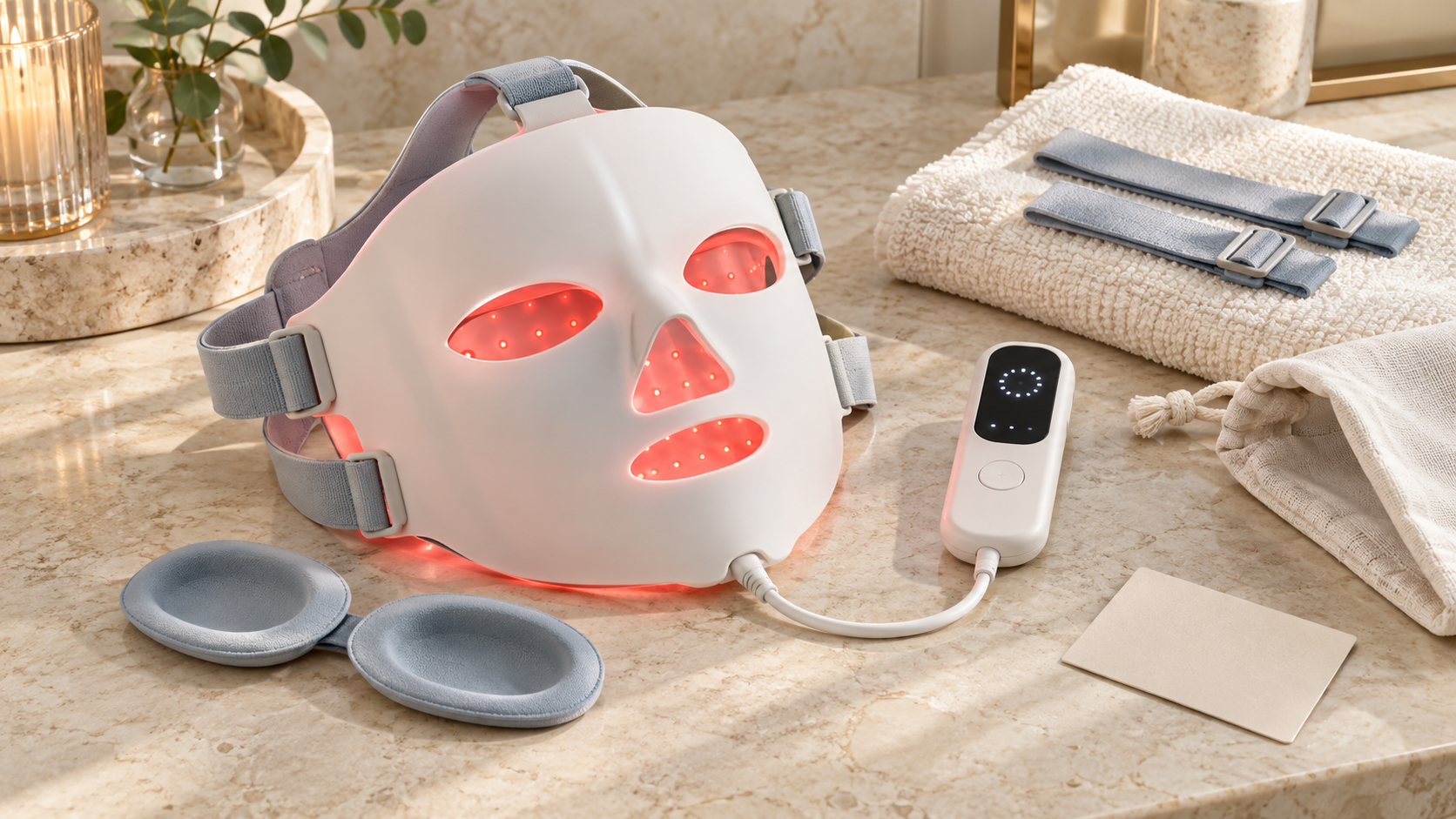
Flexible silicone masks generally sit closer to the face, while rigid masks may offer more structure. Neither format is automatically better.
Consider the mask’s weight, straps, eye openings, nose fit, and whether it maintains relatively even coverage across the face.
5. Eye Protection
Confirm what type of eye protection is included and whether the manufacturer provides clear instructions. This is especially important for bright blue-light modes.
6. Regulatory Status
In the United States, some LED masks have received FDA 510(k) clearance for specific indications, such as the treatment of full-face wrinkles or mild-to-moderate inflammatory acne.
FDA clearance does not mean that every marketing claim has been independently proven, nor does it guarantee that a device will work equally well for every person. It does, however, provide more useful information than an unsupported claim that a mask is simply “FDA approved.”
7. Warranty and Return Policy
Results take time, but discomfort or poor fit may become apparent much sooner. Review the return window, warranty length, replacement policy, and any hygiene-related exclusions before purchasing.
8. Total Value
The most expensive mask is not automatically the best choice.
Compare the intended use, treatment protocol, fit, warranty, and evidence supporting the device—not just the number of colors or LEDs listed on the product page.
For a closer look at two widely discussed options, read our CurrentBody vs. Omnilux comparison.
Are LED Face Masks Worth It? Our Verdict
LED face masks can be worth the investment for people who want a convenient, non-invasive skincare tool and are prepared to use it consistently.
The strongest case for purchasing one is not the promise of dramatic overnight results. It is the ability to complete repeated light treatments at home using a device designed for a clearly stated purpose.
An LED mask is less likely to feel worthwhile if you expect it to replace professional procedures, prescription acne care, sunscreen, or a complete skincare routine.
Before buying, focus on three questions:
- Is the device intended for your main skin concern?
- Can you realistically follow the recommended schedule?
- Does the company provide transparent specifications, safety information, and a reasonable return policy?
If the answer to all three is yes, an LED mask may be a useful long-term addition to your routine.
Frequently Asked Questions
Do LED face masks really work?
Some studies support the use of specific red, near-infrared, and blue-light protocols for concerns such as fine lines and mild-to-moderate inflammatory acne. Results depend on the device, treatment protocol, skin concern, and consistency of use.
How often should you use an LED face mask?
Follow the instructions provided with your specific device. Many masks recommend several sessions per week, but treatment schedules are not universal.
Can I use an LED mask every day?
Some devices permit daily use, while others recommend fewer sessions. More frequent treatment is not automatically better, so do not exceed the manufacturer’s guidance.
Do LED masks replace professional treatments?
No. Home LED masks generally deliver gradual results and should not be expected to match every professional device or procedure.
Are more LEDs always better?
No. LED count is only one specification. Wavelength, irradiance, dose, treatment duration, coverage, fit, and device design also influence performance.
Is FDA clearance important?
It can provide useful reassurance that a device has been reviewed for a stated indication and found substantially equivalent to an appropriate predicate device. However, it is not a guarantee of results and should not be interpreted as approval of every advertising claim.
This article is for general informational purposes only and does not constitute medical advice. Consult a qualified healthcare professional regarding persistent skin concerns, medication-related photosensitivity, or uncertainty about whether light therapy is appropriate for you.